The night starts here... forget your name... forget your fear...
You drop a coin... into the sea... and shout out "Please come back to me"...
You name your child... after your fear... and tell them "I have brought you here"...
Showing posts with label Essays. Show all posts

Friday, February 18, 2011

Texts take us on a journey to different worlds while encouraging us to reflect on our own

Texts take us on a journey to different worlds while encouraging us to reflect on our own.

Texts take us far enough away from reality to be considered fiction, but not far away to not make a statement on our current world/reality. Or if statement is the wrong word then let me use question- texts make us question our own reality in a way that we probably never would have had we not come into contact with that particular text. The ‘good of society’ course showed us many texts that made me question my own reality, some of these questions were good, others not so good or very easy to answer. Thos essay will be showing some of the questions that were raised in the duration of this course, and will hopefully leave you with a few questions of your own.

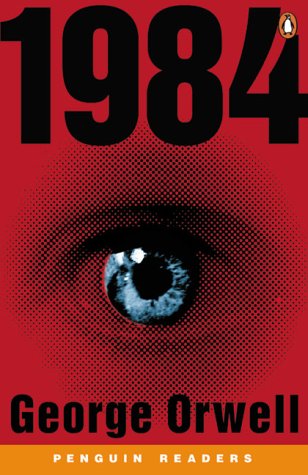
The world of 1984 was bland, dark and miserable; the government was all powerful- watching the people 24/7. The society was kept submissive and blinded by its own social system/ hierarchy and more the 80% of the population lived way below to poverty line- and these are just a few examples. When reading 1984 you become so immersed in the book; you can practically feel the chains that Winston fights against chafing your own wrists, and when you finally put the book down- glad to be rid of the iron manacles you see that they are still there, they’d always been there- you’d just never realised it before. Most people don’t acknowledge it, but our current world is so similar to that of 1984 when you look at it from a different light. George Orwell had littered his book with similarities trying to get our world to realise, to reflect, on just how close we are to becoming a society that functions like the society in 1984. The government has almost full control of our lives; we are under 24/7 watch by all the cameras on every street corner, our credit cards can say exactly where we are and when we were there, our home address, our telephone number, our job, our date of birth- all accessible to the government with a few taps on a computer keyboard. If they so wanted they could completely erase our very existence; our word for this is ‘identity theft’, the Party’s word for it is ‘vaporise’.

The Matrix, instead of showing us a different social world, depicted a different world entirely; a different physical look, a different social system, a different mindset. Based in a world where over 95% of the world’s population has no idea that they’re in a computer simulated reality; after watching that text its not surprising that you also begin to question the ‘realness’ of your own reality. What proof do we have that we’re not just mental projections of our consciousness? Because really it does make sense doesn’t it; where do we go after we die? - back to the ‘the source’? And what about possessions- is that the devil, or the agents? The Matrix targets certain beliefs and creates an explanation, one that actually fits with a little imagination. Coupled with the fact that everyone that was under was completely oblivious to the fact that they were simply human batteries provides that little bit extra- that little question of ‘how do we know?’ Most people would consider themselves Neo, but what if we’re really just those random people on the street that have no idea how stupid they are. It’s a horrible thought isn’t it?

Adding on from the last paragraph- the question of ‘do we really exist here?’ then comes another question- one that popped up in the text The Island- ‘if we do exist- what’s the purpose?’ Now, I realise that a lot of people have asked that question before- in fact probably everyone has asked that question at some point in their lives; however The Island brought up a rather dark theory on the meaning of life. The characters in the text are clones- their purpose in life was to die. The fact that the characters, which the audience forms a relationship to, have such a dark meaning to their life makes you question weather your own meaning is meant to be just as dark, or ever worse, no meaning at all. Because, think about it, this is the average human being’s life cycle; you are born, you grow up, you go to school, you get a job, you get married, you start a family, you retire, you die. Does that not seem a little pointless to you? One could think that its better to be used to save people- or better to be used as a battery to power something because at least then we’ll have a purpose that’s more then just continuing the Homo sapien species.

So really, I would say that texts do take you away from your own world- where you’re free of responsibility, of your teachers, your boss, your problems- they take you to a place where nothing is real, nothing is painful; except then they drop you back into your own world again and you realise that the ‘fictional world’ is actually not so different from your own. You’re left with the knowledge that your world is just as bad as the one that you’d left behind. Or maybe its not, because maybe your world doesn’t exist at all?


Lord of the Flies


This is number 3 of my awesome Lit essays ;D
I would also recommend reading/ seeing Lord of the Flies before you read this essay.


How does the Lord of the Flies relate to studies in psychology?

There are many different experiments that relate to the plotline of this movie, some of them include the Milgram experiment and the Robber’s cave experiment. This movie explores such behaviours as obedience, social hierarchy and Human instinct or we could call it the hierarchy of human need, and many other social behaviours which we will look at in this essay, this text is going to simply link experiments with they’re parts in the movie.

Humans are social creatures, and therefore have a need to be accepted and loved, one of the easiest ways of getting accepted is to act like the group that you want to be accepted by, this act goes by another name: conformity. The most well-known conformity experiment was done by Solomon Asch; He gathered a bunch of boys into a room to ask a series of questions- except for one all the boys were actors, and being instructed to say the wrong answer. The results would come from the lone authentic boy if he would give the obvious correct answer, or follow the social code and give the wrong answer. More often then not the person would give the wrong answer, and prove Asch’s conformity theory. The boys in Lord of the Flies did the exact same thing, it was either all for Ralph or all for Jack, they took social cues from each other to chose either boy.


The fact that the boys did follow social cues, or didn’t want to stand out, can be linked back to Maslow’s Hierarchy of Human Needs; as I said before humans feel the need to be accepted and loved.

However before that level comes the levels of Physiology, or in layman’s terms survival and the level of safety; after that comes love/belonging, esteem then self-actualisation which is the level of knowing who you are, and how you work. The boys in the text did go through this hierarchy, they went through it in order, first getting things to survive, then reassuring themselves with shelter and safety, creating a loving group (bar Jack and his group) where each boy had a place in. Most of them even made it through to the higher levels of the triangle, becoming the leaders and figuring out, or trying to figure out the problems in the society.

Another experiment that was very closely linked to this text was the Robber’s cave experiment. In this experiment two groups of boy, around the same age as the character in the book were left to their own devices in a isolated camp. The boys created hierarchy and took care of their survival needs, overall it was almost mirror image to what the children in Lord of the Flies had done, bar the murder.

Another role-play experiment similar to Robber’s cave and thus to Lord of the Flies is the Stanford prison experiment, where students got divided into “prisoners” and “guards”. The result recieved from this controversial experiment is akin to the plot line of the text. Basically when a person is put in a certain situation, they would act accordingly. For example Jack, fell into the role of defying Ralph and becoming the rebel leader, through out the course of the book Jack became more and more sadistic, and more and more power drunk. The Stanford Prison experiment had the same reaction, the guards would become sadistic and do things that would have never thought to have done if in their right minds.

Overall Lord of the Flies is a very interesting book, its focus on human behaviour when left on its own is striking and unnerving. It relates to many experiments done in the psychology arena, experiments such as Robber’s cave, the Stanford Prison experiment and Maslow’s experiments. All of these describe a side of human nature that all of us know exist, but few wish to understand.


by Taxi xoxo


1984


Number 1, or really 2 of my new found literature :D

This is my essay concerning the book 1984 by George Orwell, so if you havent read it i advise that you do before you read any further at the risk of being severely confused.


Humanity needs to be controlled in order to function efficiently. In your opinion, is this the ultimate point of Nineteen Eighty-Four?

Its true, mankind needs some form of control to operate peacefully, however I disagree that that was the ultimate point of George Orwell’s book Nineteen Eighty-Four. In truth I believe that his ultimate point was something a little different; instead he was trying to deliver a message from between the lines of his book. A warning that is; if humanity continues to progress as we are doing so now, our future generations will suffer the consequences, the existence of a society controlled and bound down by its own mind, and by its own ‘free will’. Orwell has littered Nineteen Eighty-Four with evidence of this theory, and hopefully this essay will convince you that Nineteen Eighty-Four is actually spelling out a warning and not convincing us to become a totalitarian society.

One of the most chilling aspects of this book is the fact that it’s not hard to see Winston’s reality becoming our reality in the near future; Orwell makes definite links between the society of Nineteen Eighty-Four and our modern society, making the book feel very personal, and the effect is enhanced as we are looking through the eyes of Winston, who has a similar mindset to that of the reader. Would you agree that in our society you rarely have any privacy? Your credit card allows people to know exactly where you are at what time, there are atleast 2 or 3 cameras on every semi busy street, be it ATM cameras, security cameras, phone cameras and not even to mention the giant satellites floating around- like the one that does the footage for Google Earth. Mankind is under watch 24/7 and we aren’t even aware of it. The only difference between the society in 1984 and the society we have now is that the people in Nineteen Eighty-Four are aware of how watched they are; they know the uses of the telescreens, they know that the thought police are always right around the corner, they know that your greatest enemy could be your own flesh and blood- it was common for children to turn in their parents to the thought police, they were praised for it. Can you really see much of a difference between the two societies? CIA vs the Thought Police, Telescreens vs Cameras; there is hardly a difference anymore- Orwell made and uses those common traits to the point that they feel almost familiar with them when you read the book, and its only when you take a step back that you realize that, if we can be so similar in that way, how much of a leap is it to be similar in the other parts of our lives? How far away can a totalitarian government be, where control lives only at the top of the hierarchy pyramid, oh wait do we already have that?

Nineteen Eighty-Four was a warning, it was telling us of how we will turn out if our society continues on as it’s going - I believe it is also trying to scare us away from that reality by showing us the worst possible outcome, and by scare I mean literally freak us out enough to change. Orwell seemed to always be discomforting the reader, adding in scenes or language that are uncomfortable to read about. One of the most obvious examples of this is perhaps when Winston is walking around the prole district and a bomb is fired into the area, this an everyday occurrence so the whole experience blows over in a matter of minutes, as Winston walks away from the scene he sees a hand, “Apart from the bloody stump, the hand was so completely whitened as to resemble a plaster cast. He kicked the thing into the gutter, and then, to avoid the crowd, turned down a side-street to the right.” Usually a human is not that nonchalant when it comes to stranded body parts, the fact that Winston was unnerves the reader, the act is found almost inhumane and we put so much emphasis on being a normal human, and seeing some one that is practically a psychopath, it scares us- we shy away from that part of humanity and I believe that is what Orwell wanted us to feel all along- a fear of becoming that society.

There is also the fact that the entire society that is portrayed in Nineteen Eighty-Four is dystopic, if Orwell’s goal were to say that humanity needs control then he would most certainly not portray this ideal society from that dystopian point of view. Orwell uses a number of different techniques to express this idea of a dystopian society, most of them being based around the atmosphere and setting. Oceania in the year Nineteen Eighty-Four has a distinct feeling of Europe during the mid 1940’s, that is to say a state of war, or just post war; and what are war and dystopia if not synonyms? The whole setting/atmosphere in Nineteen Eighty-Four is bleak, there are grey, eroding buildings that smell like cabbage, 85% of the population in Nineteen Eighty-Four live in the ghetto and there are limited-nil supplies of boots and razors those things alone make you think of a barren, unhappy place where everyone has holes in their winter jackets. Well everyone except the 2% of the population that live in every dystopian society that have their winter jackets made out of the finest quality mink fur, drink the finest quality of red wine while the rest drink mass produced ‘victory gin’ and have the most luxurious of living areas that don’t smell of cabbage; there is a distinct hierarchy system set up in this society, one that is impossible to change. Orwell uses these themes to display the dystopian-ness of Nineteen Eighty-Four; the society is physically portrayed as dystopian to mirror the way that is dystopian mentally. Mentally it is a society that is oppressed by the use of their own mind, by the process called ‘doublethink’ and it seems that even at the very top of the hierarchy pyramid there is no escape, there is no leader anymore, it’s a vicious cycle.

A warning- that is what Nineteen Eighty-Four is, there is no way that Orwell is trying to convince his readers that the world would be a better place when humanity is controlled, if that was his goal he would not have written his book portrayed in such a negative light, full of unnerving characters with psychopathic tendencies, atmospheres that feel like everything is dead or dying and then making it feel like this future is right around the corner, that if only we went a little bit more the right or the left our society could end up just like the one that Winston tries and fails to escape with the only thing he is left with are the horrifying consequences. We can only hope that Orwell wrote his book soon enough that humanity might take some heed and maybe be able to scrape past that future that we seem to be heading for anyway.


by Taxi xoxo